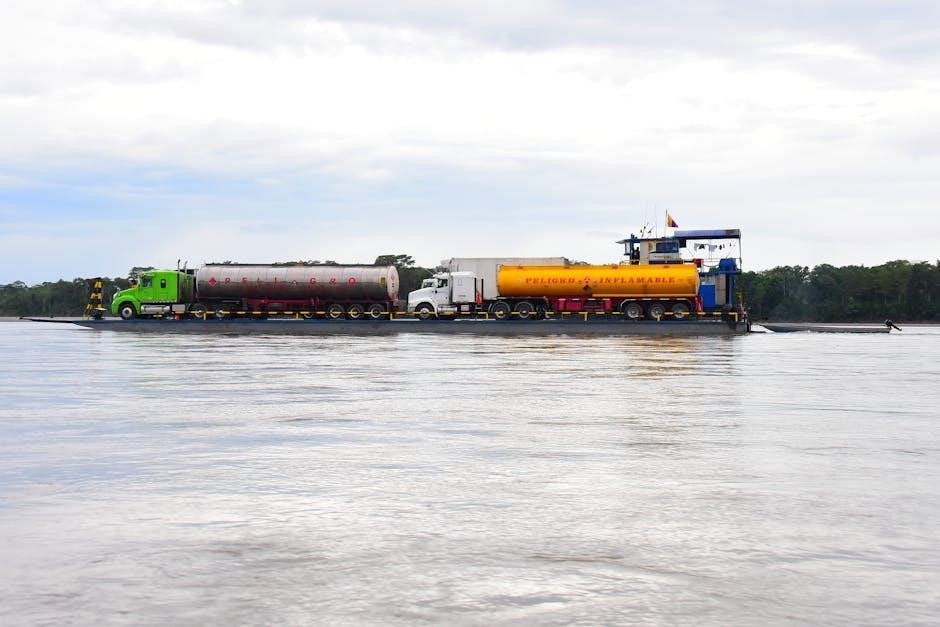
Tanker Endorsement Study Guide: A Comprehensive Overview
Prepare for your CDL tanker endorsement exam! This guide offers 150 practice questions, audio narration, and digital flashcards for effective study, covering all essential topics.
What is a Tanker Ship?
Tankers are specialized maritime vessels fundamentally designed for the bulk transportation and storage of liquids or gases. These aren’t your typical cargo ships; they are engineered to handle hazardous and valuable commodities safely and efficiently across vast oceans. Major classifications include oil tankers – crucial for petroleum products – chemical tankers, handling diverse chemical compounds, and gas carriers, dedicated to liquefied gases.
Today’s tankers represent some of the largest and most robust structures afloat, demanding stringent construction standards dictated by the International Maritime Organization (IMO). Understanding their unique characteristics is vital, especially when pursuing a tanker endorsement, which requires specialized knowledge beyond standard CDL qualifications. These vessels are integral to global trade and energy supply chains.
Types of Tanker Ships
Tanker ships diversify significantly based on the cargo they transport, demanding specialized handling procedures and safety protocols. Oil tankers, also known as petroleum tankers, are paramount for moving crude oil and refined products globally. Chemical tankers are designed for a vast array of chemical compounds, requiring stringent material compatibility and containment systems.
Gas carriers specifically transport liquefied gases like propane, butane, and LNG, necessitating cryogenic technology and advanced safety features. Each type presents unique challenges for operators and requires specific endorsements. A comprehensive understanding of these distinctions is crucial for CDL tanker endorsement preparation, ensuring safe and compliant cargo handling practices across diverse maritime operations.
Oil Tankers (Petroleum Tankers)
Oil tankers dominate the maritime transport of crude oil and refined petroleum products, forming a critical link in the global energy supply chain. These vessels range in size from smaller coastal tankers to Ultra Large Crude Carriers (ULCCs), capable of hauling millions of barrels. Understanding their construction, cargo systems, and inherent risks is vital for CDL tanker endorsement candidates.

Key considerations include vapor control, inert gas systems, and spill prevention measures. Thorough knowledge of oil tanker operations, including loading, discharging, and ballast management, is essential for safe and compliant transport. Preparing for the endorsement requires focused study on these specific aspects of petroleum carriage.
Chemical Tankers
Chemical tankers transport a diverse range of liquid chemicals in bulk, demanding stringent safety protocols and specialized handling procedures. Unlike oil tankers, chemical tankers often carry multiple cargoes in segregated tanks, requiring meticulous attention to compatibility and contamination prevention. Understanding the International Maritime Dangerous Goods (IMDG) Code is paramount for anyone seeking a tanker endorsement.
These vessels feature sophisticated tank coating systems and vapor recovery units to minimize environmental impact and ensure cargo purity. CDL study materials should emphasize chemical classifications, emergency response procedures, and the unique challenges associated with handling hazardous materials at sea.
Gas Carriers
Gas carriers are specifically designed for transporting liquefied gases, such as propane, butane, ammonia, and LNG, requiring highly specialized vessel designs and operational procedures. These tankers operate under extreme pressure or cryogenic temperatures, demanding rigorous safety standards and crew training. A tanker endorsement study guide must cover gas detection systems, ventilation protocols, and emergency shutdown procedures.
Different gas types necessitate varying tank construction materials and containment systems. Understanding the properties of each gas, potential hazards, and appropriate response measures is crucial. Comprehensive study materials should include detailed information on gas carrier types and relevant international regulations.
Tanker Ship Construction and Design
Tanker ship construction prioritizes cargo capacity and structural integrity. These vessels are characterized by large cargo tanks occupying most of the hull, with the stern section housing machinery, navigation equipment, and crew quarters. A tanker endorsement study guide must detail tank arrangement, ballast systems, and the impact of liquid cargo on ship stability.
Understanding the unique structural demands imposed by liquid bulk cargoes is vital. Study materials should cover double-hull construction, tank venting systems, and the importance of proper cargo segregation. Knowledge of these design elements is essential for safe operation and regulatory compliance.
Cargo Space and Tank Arrangement

Tanker cargo spaces are meticulously designed for efficient and safe liquid bulk transport. A comprehensive tanker endorsement study guide will emphasize the various tank arrangements – longitudinal, transverse, and wing tanks – and their impact on vessel stability. Understanding cargo segregation is crucial; different chemicals or oil grades require dedicated tanks to prevent contamination.

Study materials should detail pump room locations, piping systems, and the function of venting systems to manage vapor pressure. Knowledge of tank cleaning procedures and the hazards associated with tank entry are also vital. Proper cargo stowage and tank arrangement are fundamental to safe tanker operations.
Stern Section Components (Machinery, Navigation, Crew Quarters)
The stern of a tanker houses critical operational components. A thorough tanker endorsement study guide will detail the location of propulsion machinery – engines, shafts, and propellers – essential for vessel movement. Navigation equipment, including the bridge and communication systems, are also situated here. Crew quarters, providing living spaces for the ship’s personnel, are typically located in the stern section for safety and convenience.
Cargo pumps, vital for loading and unloading, are often found in the stern. Understanding the layout and function of these components is crucial for exam preparation and safe operation.
International Maritime Organization (IMO) Regulations
The IMO sets global standards for tanker safety and pollution prevention. A comprehensive tanker endorsement study guide must cover key IMO conventions like MARPOL, addressing oil pollution and other harmful discharges. SOLAS, focusing on safety of life at sea, is also critical, detailing fire protection, navigation, and communication requirements.
Understanding the International Safety Management (ISM) Code, promoting safe operating practices, and the International Ship and Port Facility Security (ISPS) Code, enhancing security, is vital. Familiarity with these regulations is essential for passing the CDL tanker endorsement exam.
Tanker Operations and Logistics
Efficient tanker operations involve complex logistics. A thorough study guide will detail voyage planning, cargo documentation, and port operations. Understanding the roles of chartering, brokerage, and ship management is crucial. Logistics encompass loading/unloading procedures, ballast management, and route optimization for fuel efficiency.
Knowledge of tanker scheduling, terminal operations, and the supply chain is essential. The Hamburg branch specializes in comprehensive logistics solutions alongside providing tanker space. Mastering these operational aspects is key to success on the CDL tanker endorsement exam, ensuring safe and compliant transport.

Cargo Handling Procedures
Safe cargo handling is paramount in tanker operations. A comprehensive study guide will cover loading, discharging, and transferring liquids/gases. Understanding pump systems, piping arrangements, and tank venting procedures is vital. Proper procedures minimize risks of spills, leaks, and contamination.
Key aspects include cargo segregation, compatibility checks, and adherence to strict safety protocols. Knowledge of inert gas systems, vapor recovery units, and emergency shutdown procedures is essential. Mastering these procedures ensures compliance with regulations and protects the environment, crucial for CDL endorsement success.
Safety Regulations for Tanker Vessels

Tanker safety is governed by stringent international and national regulations. A thorough study guide will detail IMO guidelines, including SOLAS and MARPOL conventions. Understanding fire prevention, explosion protection, and emergency response procedures is critical. Regulations cover equipment maintenance, crew training, and operational practices.
Key areas include tank entry procedures, gas detection systems, and personal protective equipment (PPE) requirements. Familiarity with safety data sheets (SDS) and emergency shutdown systems is essential. Compliance ensures crew safety, environmental protection, and successful CDL endorsement attainment, minimizing potential hazards.
Hazards Associated with Tanker Operations
Tanker operations present unique and significant hazards. A comprehensive study guide must cover flammable liquids and gases, detailing ignition sources and vapor control. Environmental concerns, particularly oil spills, require understanding containment and cleanup procedures. Inerting systems, ventilation, and static electricity control are vital safety measures.
Potential risks include cargo tank explosions, fire, and toxic gas exposure. Proper training in emergency procedures, including drills and equipment usage, is crucial. The guide should emphasize the importance of risk assessment and adherence to safety protocols to mitigate these dangers and ensure safe operations.
Flammable Liquids and Gases
Tankers routinely carry highly flammable substances, demanding strict safety protocols. A thorough study guide must detail the flashpoints and auto-ignition temperatures of common cargoes. Understanding vapor density – whether vapors are heavier or lighter than air – is critical for ventilation strategies.
Control of ignition sources, including static electricity, open flames, and electrical sparks, is paramount. Inerting systems, using nitrogen, reduce oxygen levels to prevent combustion. Proper grounding and bonding procedures minimize static buildup. The guide should emphasize the dangers of vapor cloud explosions and the importance of leak detection systems.

Environmental Concerns (Spills)
Tanker operations pose significant environmental risks, particularly concerning oil spills. A comprehensive study guide must cover spill prevention measures, including proper cargo handling and vessel maintenance. Understanding the International Convention on the Prevention of Pollution from Ships (MARPOL) is crucial.
The guide should detail various spill response techniques, such as containment booms, skimmers, and dispersants. Reporting procedures and regulatory requirements following a spill are essential knowledge. Emphasis should be placed on the long-term ecological consequences of spills and the importance of responsible tanker operations to protect marine ecosystems.
US Sanctions and Tanker Seizures
A tanker endorsement study guide must address the impact of US sanctions on tanker operations. Recent events, like the Trump administration’s efforts to control Venezuelan oil, involved seizing tankers linked to sanctioned entities – seven vessels were seized.
Furthermore, the guide should cover France’s recent seizure of a tanker suspected of being part of Russia’s “shadow fleet,” designed to circumvent sanctions. Understanding these geopolitical factors and their legal implications for tanker crews is vital. Knowledge of sanction regulations and potential seizure scenarios is crucial for CDL endorsement test preparation.
Venezuela Oil Tanker Seizures (Trump Administration)
A comprehensive tanker endorsement study guide should detail the US actions against Venezuela’s oil industry under the Trump administration. US forces boarded and took control of seven oil tankers connected with Venezuela, aiming to restrict its oil exports.
This involved navigating complex legal justifications and international implications. Understanding these seizures is crucial for prospective tanker personnel, as it highlights the potential for cargo to be subject to governmental intervention due to sanctions. The guide should explain the rationale behind these actions and the resulting impact on tanker operations and compliance procedures.
Russian Sanction-Busting Shadow Fleet & Tanker Seizures (France)
A thorough tanker endorsement study guide must address recent geopolitical events impacting tanker operations. France seized an oil tanker in the Mediterranean suspected of belonging to Russia’s “shadow fleet” – vessels used to circumvent sanctions.

This highlights the increasing complexity of international maritime law and the risks associated with transporting sanctioned goods. The guide should explain how tankers are utilized to bypass restrictions, the potential consequences for crews and operators, and the importance of due diligence in verifying cargo origins and compliance with evolving regulations. Understanding these scenarios is vital for responsible tanker operations.
CDL Tanker Endorsement Test Preparation
Effective preparation is key to passing your CDL tanker endorsement exam. A comprehensive study guide, ideally in PDF format, should include 150 practice questions mirroring the test’s format and difficulty.
Audio narration accompanying the questions enhances learning, catering to different learning styles. Digital flashcards provide a convenient method for memorizing critical definitions and regulations. Focus on cargo handling procedures, safety protocols, and hazard awareness. Mastering these areas, alongside understanding tanker construction and IMO regulations, will significantly increase your chances of success on the exam.
Practice Questions and Audio Narration
Maximize your learning with targeted practice! A quality tanker endorsement study guide PDF should feature at least 150 practice questions, designed to simulate the actual CDL exam. These questions should cover all critical areas, including cargo handling, safety regulations, and hazard identification.
Crucially, look for resources offering audio narration alongside the questions. Hearing the questions read aloud reinforces comprehension and helps identify areas needing further study. This multi-sensory approach caters to diverse learning preferences, boosting retention and confidence for exam day. Consistent practice is paramount to success!

Digital Flashcards for Study
Reinforce key concepts with interactive flashcards! A comprehensive tanker endorsement study guide PDF will often include digital flashcards as a supplementary learning tool. These flashcards should cover essential terminology, regulations, and procedures related to tanker operations.
The benefit of digital flashcards lies in their portability and customizable nature. You can study anytime, anywhere, focusing on areas where you need the most improvement. Look for features like spaced repetition, which optimizes learning by presenting cards at increasing intervals. Effective flashcard use dramatically improves recall and exam readiness.
Tanker Shipping Business and Logistics
The tanker shipping industry is a complex global network. Understanding its business aspects complements your endorsement study. All tanker shipping business is efficiently managed by the Hamburg branch, offering comprehensive logistics solutions beyond just vessel space.
This includes cargo planning, route optimization, and regulatory compliance – crucial elements for safe and efficient tanker operations. A thorough study guide PDF should touch upon these logistical considerations. The industry demands meticulous planning and adherence to international standards, impacting everything from cargo handling to environmental protection. Mastering these concepts is vital.
Hamburg Branch Tanker Services
The Hamburg branch stands as a central hub for all tanker shipping business. Beyond simply providing vessel capacity, they deliver comprehensive logistics solutions tailored to client needs. This includes meticulous cargo planning, optimized route selection, and unwavering adherence to complex international regulations.
A robust tanker endorsement study guide PDF should acknowledge the importance of these logistical elements. The Hamburg branch’s expertise ensures safe, efficient, and compliant tanker operations globally. They manage the intricate details, allowing clients to focus on their core business, while navigating the challenges of maritime transport.
Recent Developments in Tanker Technology
Modern tanker ships represent some of the largest and most robust structures on the world’s oceans. Technological advancements are continually reshaping the industry, demanding updated knowledge for professionals. A comprehensive tanker endorsement study guide PDF must reflect these changes.
Recent innovations include advanced monitoring systems for cargo integrity, enhanced hull designs for fuel efficiency, and sophisticated navigation technologies. These developments directly impact operational procedures and safety protocols. Understanding these advancements is crucial for passing the CDL endorsement test and ensuring responsible tanker operations in today’s evolving maritime landscape.
Future Trends in Tanker Shipping
The tanker shipping industry is poised for significant transformation. A forward-looking tanker endorsement study guide PDF needs to address emerging trends like alternative fuels – including LNG and ammonia – and their impact on cargo handling procedures. Increased automation and remote monitoring technologies will also redefine operational roles.
Furthermore, stricter environmental regulations will drive demand for innovative spill prevention and response systems. Understanding these future trends is vital for aspiring tanker officers and professionals seeking to navigate the evolving maritime landscape and successfully pass their CDL endorsement exam.
Resources for Tanker Endorsement Study Guides (PDF)
Comprehensive preparation requires the right resources. Numerous tanker endorsement study guide PDFs are available online, offering practice questions and detailed explanations of regulations. Look for guides that include audio narration to reinforce learning and digital flashcards for efficient memorization of key concepts.
Prioritize resources aligned with current CDL requirements and IMO standards. Many commercial providers offer premium PDF guides with updated content and realistic exam simulations. Utilizing a well-structured PDF study guide is crucial for achieving a passing score on your tanker endorsement test.
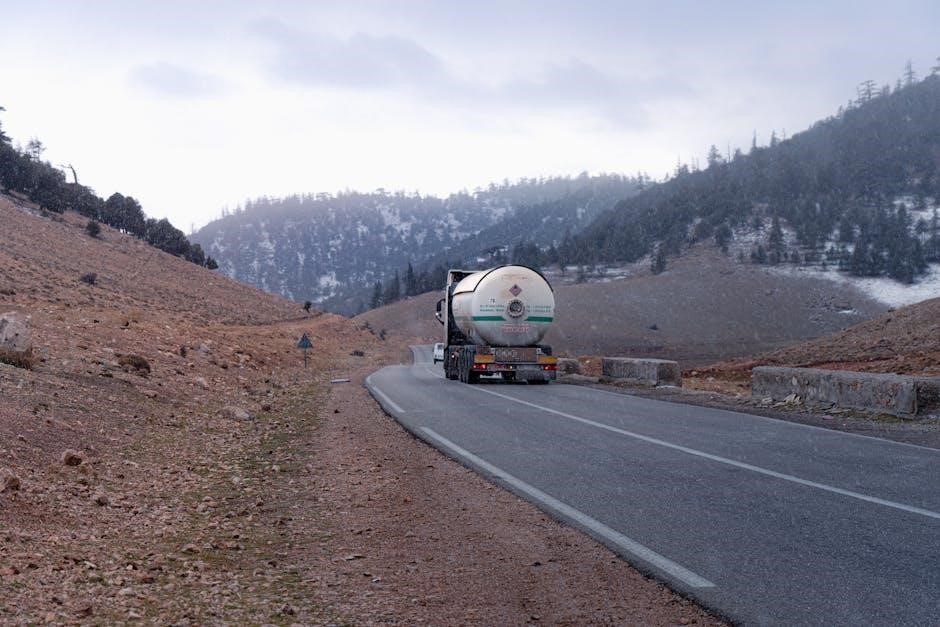
Understanding Tanker Ship Propulsion Systems
Tanker vessels employ robust propulsion systems for efficient ocean transit. Typically, large tankers utilize low-speed diesel engines, known for their fuel efficiency over extended voyages. These engines directly drive the propeller, often through a reduction gearbox to optimize torque and speed.
Understanding the location of propulsion machinery – generally within the stern section alongside navigation and crew quarters – is vital. Modern tankers may also incorporate bow thrusters for enhanced maneuverability in confined spaces. Familiarity with these systems is crucial for safe operation and is often covered in tanker endorsement study guides.