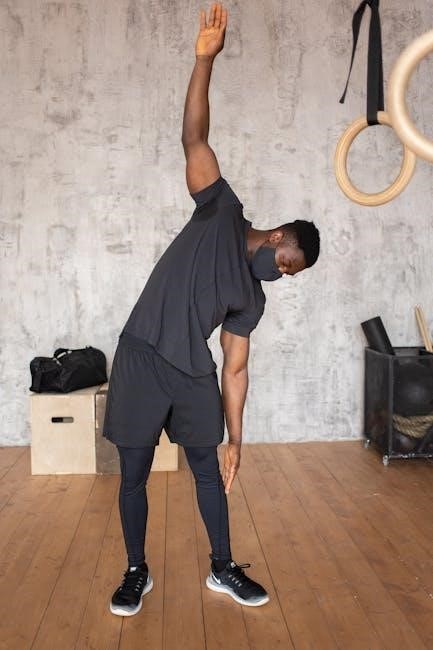
Full body stretching routines enhance flexibility, relaxation, and overall well-being, offering a complete sequence for improved movement and reduced muscle tension.
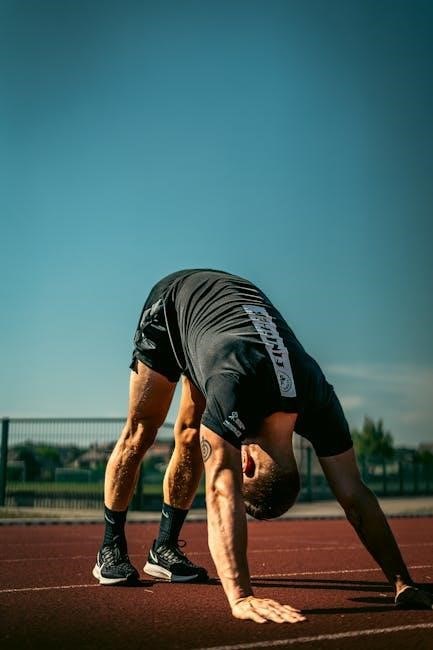
A full routine incorporates stretches targeting every major muscle group, promoting full range of motion and aiding in post-workout recovery.
What is a Full Body Stretch Routine?
A full body stretch routine is a carefully designed sequence of exercises intended to improve flexibility and range of motion throughout the entire body; Unlike focusing on isolated muscle groups, it systematically addresses all major areas – from the neck down to the calves.
Typically, a routine consists of 10-15 distinct stretches, divided between upper and lower body components. These stretches can be static (holding a position), dynamic (controlled movements), or a combination of both. The goal is to elongate muscles, increase blood flow, and release tension.
A well-structured routine, often available as a PDF, will guide you through each stretch with clear instructions, ensuring proper form and maximizing benefits. It’s about achieving full body awareness and promoting holistic physical health.
Benefits of Regular Full Body Stretching
Consistent full body stretching, often guided by a PDF routine, yields numerous physical and mental advantages. Improved flexibility is paramount, enhancing athletic performance and reducing injury risk. Increased blood flow delivers vital nutrients to muscles, aiding recovery and reducing soreness.
Beyond the physical, stretching alleviates muscle tension, promoting relaxation and reducing stress. Regular practice can improve posture, balance, and coordination. A full routine can also enhance body awareness, allowing you to identify and address areas of tightness.
Ultimately, incorporating stretching into your lifestyle contributes to overall well-being, fostering a greater sense of ease and movement throughout daily activities.
Understanding Full Body Anatomy for Stretching
Full body stretch routines require awareness of major muscle groups – understanding how they connect and function – to maximize benefits and prevent injury.
Major Muscle Groups to Target
A comprehensive full body stretch routine PDF should prioritize several key muscle groups for optimal results. These include the neck, shoulders, chest, back, hamstrings, quadriceps, hip flexors, and calves.
Don’t overlook the glutes, often tight from prolonged sitting. Targeting these areas ensures balanced flexibility and addresses common areas of tension. Effective routines include stretches for each, promoting full range of motion.
Remember to consider both anterior and posterior muscle groups – for example, stretching both the chest and back. This balanced approach prevents imbalances and supports proper posture. A full routine addresses the entire kinetic chain.
Importance of Warming Up Before Stretching
Prior to initiating a full body stretch routine PDF, a proper warm-up is crucial. Warming up increases blood flow to muscles, enhancing their elasticity and reducing the risk of injury. A full warm-up prepares the body for deeper stretches.
Light cardio, like jogging in place or arm circles, for 5-10 minutes is ideal. Dynamic stretches – controlled movements through a range of motion – are also beneficial. These movements mimic the stretches you’ll perform, further preparing the muscles.
Skipping a warm-up can lead to muscle strains or tears. A full warm-up ensures muscles are pliable and receptive to stretching, maximizing benefits and safety.
Cooling Down and Static Stretching
Following a full body stretch routine PDF, a cool-down period is essential for a gradual return to a resting state. This prevents dizziness and allows the heart rate to normalize. Incorporate static stretches during this phase – holding each stretch for 20-30 seconds.
Static stretching improves flexibility and reduces muscle soreness. Focus on major muscle groups, maintaining deep, controlled breaths throughout each stretch. A full cool-down aids recovery and minimizes post-exercise stiffness.
Remember, static stretches are best performed after warming up or a workout, not as a primary warm-up. This ensures muscles are prepared and less prone to injury.
Upper Body Stretching Exercises
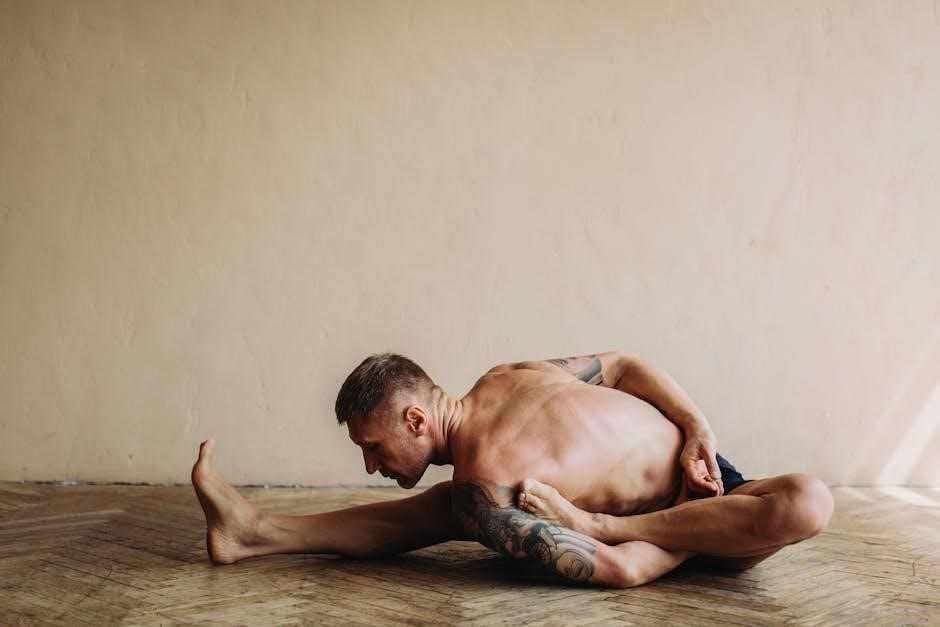
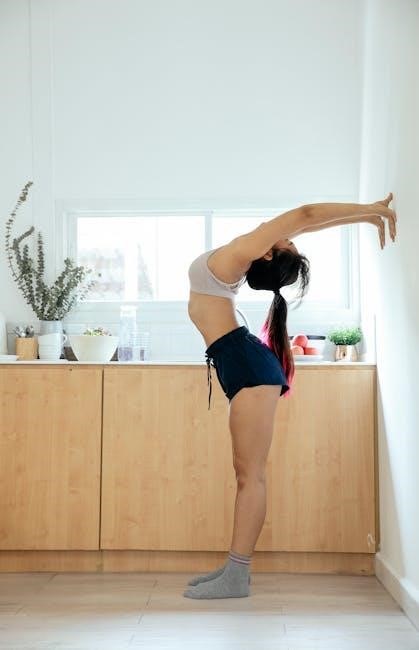
Upper body stretches, vital in a full body stretch routine PDF, target the neck, shoulders, chest, and back for improved posture and flexibility.
Neck Stretches
Neck stretches are a crucial component of any comprehensive full body stretch routine PDF, addressing tension often accumulated from prolonged screen time or stress.
Neck Tilts gently stretch the lateral neck muscles; slowly tilt your head towards your shoulder, holding for 15-30 seconds on each side. Avoid forcing the stretch.
Neck Rotations improve rotational flexibility; gently turn your head to look over your shoulder, holding for 15-30 seconds per side. Maintain a relaxed posture.
These exercises enhance neck mobility, alleviate stiffness, and contribute to overall upper body relaxation. Remember to perform these stretches slowly and mindfully, listening to your body’s limits.
Neck Tilts
Neck tilts are a foundational exercise within a full body stretch routine PDF, specifically targeting the muscles along the sides of your neck. This stretch effectively alleviates tension and improves flexibility.
To perform, sit or stand with good posture. Gently lower your ear towards your shoulder, feeling a stretch along the opposite side of your neck. Avoid lifting your shoulder to meet your ear; the movement should come from the neck itself.
Hold the stretch for 15-30 seconds, breathing deeply. Repeat on the other side. Remember to keep your shoulders relaxed and avoid any forceful movements. This simple tilt can significantly reduce neck discomfort.
Neck Rotations
Neck rotations are a crucial component of a comprehensive full body stretch routine PDF, designed to enhance neck mobility and reduce stiffness. This exercise gently works the muscles responsible for turning your head.
Begin by sitting or standing with a straight back and relaxed shoulders. Slowly turn your head to the right, as if looking over your shoulder. Maintain a comfortable range of motion, avoiding any pain or forcing the movement.
Hold the rotated position for 15-30 seconds, breathing deeply. Repeat on the left side. Ensure the movement is controlled and deliberate, promoting a gentle stretch. Regular neck rotations can alleviate tension headaches.
Shoulder Stretches
Shoulder stretches are vital within a full body stretch routine PDF, addressing tension often accumulated from daily activities and exercise. These stretches improve posture and range of motion in the shoulder joint.
Incorporating both dynamic and static stretches is beneficial. Dynamic movements, like arm circles, prepare the muscles for activity, while static holds increase flexibility. Focus on feeling a gentle stretch, never pain.
Regular shoulder stretching can prevent injuries and improve athletic performance. Prioritize proper form to maximize benefits and avoid strain. A well-rounded routine should include stretches targeting all aspects of the shoulder complex.
Arm Circles
Arm circles are a dynamic shoulder stretch frequently included in full body stretch routine PDFs. They effectively warm up the shoulder joint and surrounding muscles, increasing blood flow and preparing them for more intense stretching.
To perform, stand with feet shoulder-width apart and extend arms to the sides. Begin with small circles, gradually increasing the size. Perform circles forward for 30 seconds, then reverse direction for another 30 seconds.
Focus on controlled movements, avoiding jerky motions. This exercise improves shoulder mobility and can alleviate tension. It’s a simple yet effective addition to any stretching regimen, promoting a full range of motion.
Cross-Body Shoulder Stretch
The cross-body shoulder stretch is a staple in many full body stretch routine PDFs, targeting the posterior shoulder muscles. This static stretch effectively increases flexibility and relieves tension often built up from daily activities or workouts.
To execute, bring one arm across your body, keeping it straight or slightly bent. Use your opposite hand to gently pull the extended arm closer to your chest. Hold the stretch for 20-30 seconds, feeling a gentle pull in the shoulder.
Repeat on the other side. Remember to breathe deeply throughout the stretch, avoiding any bouncing or forceful movements. This stretch promotes a full shoulder extension.
Chest Stretches
Chest stretches are crucial components of a comprehensive full body stretch routine PDF, counteracting the effects of prolonged sitting and promoting better posture. Tight chest muscles can contribute to rounded shoulders and restricted breathing.
Effective chest stretches open up the front of the body, improving flexibility in the pectoral muscles. Common exercises include the doorway chest stretch, where you place forearms on a doorframe and gently lean forward.
Another option is lying on your back with arms extended to the sides, allowing gravity to assist the stretch. Hold each stretch for 20-30 seconds, focusing on deep, controlled breaths for a full expansion.
Doorway Chest Stretch
The doorway chest stretch is a simple yet effective exercise often included in full body stretch routine PDFs. It targets the pectoral muscles, helping to improve posture and counteract the effects of hunching over desks or devices.
To perform this stretch, stand in a doorway and place your forearms on the doorframe, elbows bent at 90 degrees. Gently lean forward until you feel a stretch across your chest.
Avoid overextending; the stretch should be comfortable, not painful. Hold the position for 20-30 seconds, breathing deeply. Repeat 2-3 times. This stretch is beneficial for anyone seeking increased chest flexibility.
Back Stretches
Back stretches are crucial components of any comprehensive full body stretch routine PDF, addressing tightness often caused by prolonged sitting or strenuous activity. These exercises improve spinal mobility and alleviate lower back pain.
Common back stretches include the Cat-Cow stretch, promoting gentle spinal articulation, and the Child’s Pose, offering a relaxing stretch for the lower back and shoulders.
Incorporating these stretches into your routine enhances posture, reduces muscle tension, and supports overall spinal health. Remember to perform these stretches slowly and mindfully, focusing on your breath for optimal benefit.
Cat-Cow Stretch
The Cat-Cow Stretch, a foundational exercise in any full body stretch routine PDF, gently warms the spine and torso. Begin on your hands and knees, ensuring wrists are under shoulders and knees under hips.
Inhale, dropping your belly towards the floor, arching your back, and lifting your head and tailbone – this is Cow Pose. Exhale, rounding your spine towards the ceiling, tucking your chin to your chest, and drawing your navel in – Cat Pose.
Repeat this flowing movement for 5-10 breaths, synchronizing breath with movement. This stretch improves posture, coordination, and relieves stress.
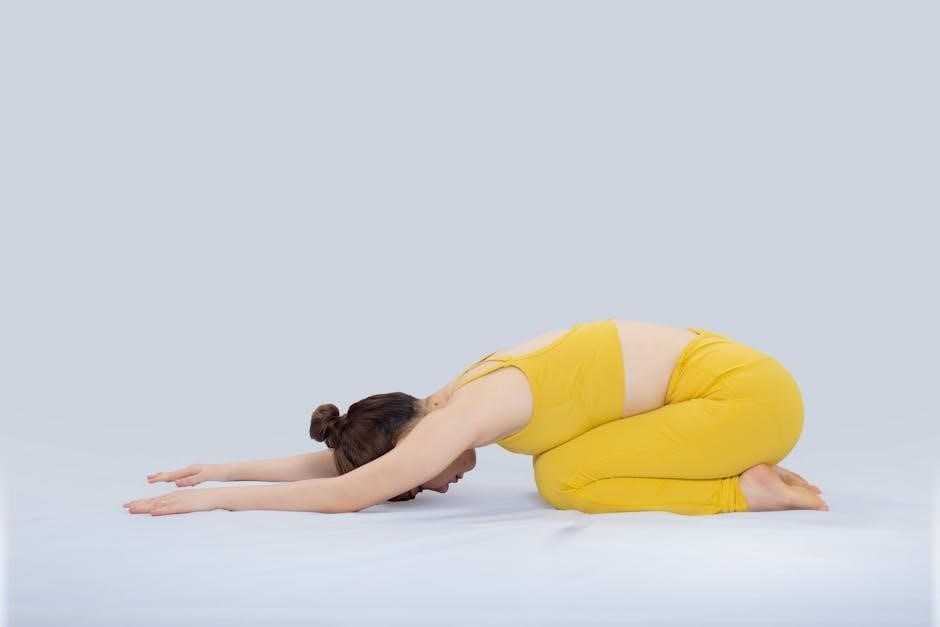
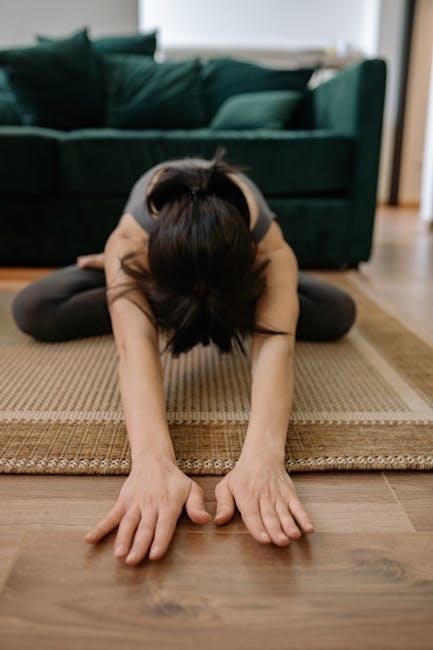
Child’s Pose
Child’s Pose is a restorative stretch frequently included in full body stretch routine PDFs, offering gentle relief for the back, hips, and shoulders. Begin on your hands and knees, then sit back on your heels, extending your torso forward.
Rest your forehead on the floor, arms extended forward or alongside your body with palms facing up. Breathe deeply, allowing your body to relax into the stretch. Hold for 30-60 seconds.
This pose calms the nervous system, reduces stress and fatigue, and gently stretches the lower back. Modifications include placing a pillow under the torso or widening the knees for comfort.
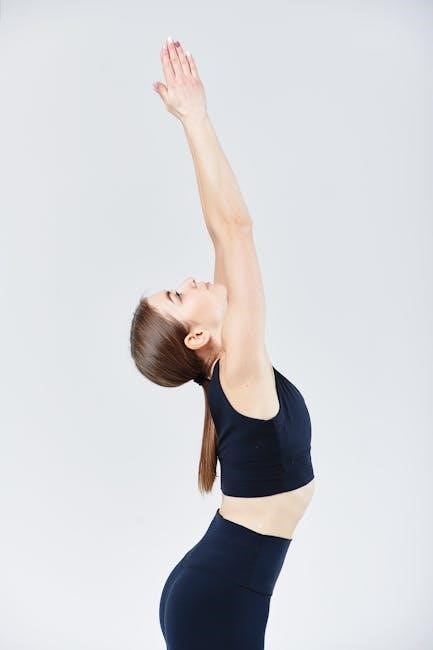
Lower Body Stretching Exercises
Lower body stretches, vital in a full body stretch routine PDF, target hamstrings, quads, hips, and calves for improved flexibility and range of motion.
Hamstring Stretches
Hamstring stretches are crucial components of any full body stretch routine PDF, addressing muscles often tight from daily activities and exercise. Seated hamstring stretches involve sitting with legs extended and reaching towards your toes, promoting flexibility.
Alternatively, a standing hamstring stretch can be performed by placing one leg straight on a slightly elevated surface and gently leaning forward. Remember to keep your back straight and avoid bouncing.
These stretches improve flexibility, reduce lower back pain, and enhance athletic performance. Proper form is essential; focus on feeling a gentle stretch, not pain. Incorporating these regularly into your routine will yield significant benefits.
Seated Hamstring Stretch
The seated hamstring stretch is a foundational exercise within a full body stretch routine PDF, effectively targeting the back of the thighs. Begin by sitting on the floor with legs extended straight out in front of you. Maintain a straight back and engage your core for stability.
Slowly reach forward towards your toes, keeping your back as straight as possible. You should feel a stretch along the back of your legs. Avoid rounding your back, as this can strain your spine.
Hold the stretch for 20-30 seconds, breathing deeply. This stretch improves flexibility and range of motion, crucial for overall physical health.
Standing Hamstring Stretch
The standing hamstring stretch is a convenient addition to any full body stretch routine PDF, easily performed almost anywhere. Begin by standing with your feet hip-width apart. Gently extend one leg straight out in front of you, keeping your heel on the ground and toes pointed upwards.
Hinge at your hips, keeping your back straight, and lean forward until you feel a stretch in the back of your extended leg. Avoid rounding your back; maintain a neutral spine.
Hold this position for 20-30 seconds, breathing deeply and consistently. Repeat on the other leg. This stretch enhances flexibility and prepares muscles for activity.
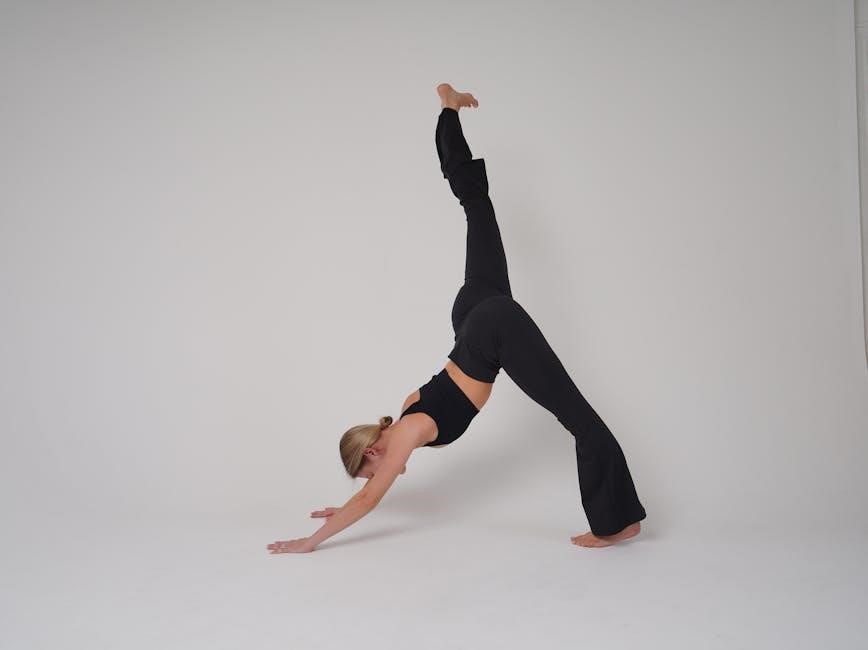
Quadriceps Stretches
Quadriceps stretches are crucial components of a comprehensive full body stretch routine PDF, targeting the muscles at the front of your thighs. These stretches improve flexibility, balance, and athletic performance. A common and effective technique is the standing quad stretch.
To perform, stand tall and bend one knee, bringing your heel towards your glutes. Reach back with the same-side hand to grasp your foot or ankle. Gently pull your heel closer to your glutes, feeling a stretch in the front of your thigh.
Maintain an upright posture and hold for 20-30 seconds, then repeat on the other leg.
Standing Quad Stretch
The Standing Quad Stretch is a foundational exercise within any full body stretch routine PDF, effectively targeting the quadriceps muscles. Begin by standing upright, maintaining good posture and balance. Bend one knee, bringing your heel towards your gluteus muscle.
Reach back with the hand on the same side as the bent leg and gently grasp your foot or ankle. If you can’t reach, use a strap or towel to assist. Gently pull your heel closer to your glutes, feeling a stretch along the front of your thigh.
Hold this position for 20-30 seconds, ensuring you maintain a straight back and engaged core. Repeat on the opposite leg.
Hip Flexor Stretches
Hip flexor stretches are crucial components of a comprehensive full body stretch routine PDF, addressing tightness often caused by prolonged sitting. These muscles connect the legs to the spine, impacting posture and movement.
Tight hip flexors can contribute to lower back pain and limited mobility. Incorporating dedicated stretches improves flexibility and range of motion. A common and effective stretch is the Kneeling Hip Flexor Stretch, where you kneel on one knee, keeping the other foot forward at a 90-degree angle.
Gently push your hips forward, feeling the stretch in the front of the hip of the kneeling leg. Hold for 30 seconds and repeat on both sides.
Kneeling Hip Flexor Stretch
The Kneeling Hip Flexor Stretch is a foundational exercise within a full body stretch routine PDF, specifically targeting the iliopsoas muscle. Begin by kneeling on a soft surface, placing one knee on the ground and the other foot flat in front of you, forming a 90-degree angle.
Maintain an upright posture, engaging your core to prevent arching your lower back. Gently lean forward, pushing your hips slightly forward until you feel a stretch in the front of the hip of the kneeling leg.
Hold this position for approximately 30 seconds, breathing deeply. Repeat two to three times on each side for optimal results.
Calf Stretches
Calf stretches are essential components of a comprehensive full body stretch routine PDF, addressing tightness in the gastrocnemius and soleus muscles. These stretches improve ankle flexibility and can alleviate lower leg discomfort.
A common variation, the Wall Calf Stretch, involves placing your hands on a wall and stepping one leg back, keeping the heel firmly planted on the ground. Lean into the wall until you feel a stretch in your calf.
Hold for 30 seconds, then repeat. Another option is a downward-facing dog pose, emphasizing the stretch. Incorporate 2-3 repetitions per leg for noticeable improvements in flexibility.
Wall Calf Stretch
The Wall Calf Stretch is a foundational exercise within any effective full body stretch routine PDF, specifically targeting the gastrocnemius and soleus muscles in the lower leg. It’s a simple yet powerful stretch for improving ankle flexibility and reducing tightness.
To perform, stand arm’s length from a wall, placing your hands against it for support. Step one leg back, keeping the heel firmly pressed into the floor. Gently lean forward, feeling the stretch in your calf muscle.
Maintain a straight back and hold the stretch for 20-30 seconds. Repeat 2-3 times per leg, ensuring a controlled and comfortable stretch.
Glute Stretches
Glute stretches are crucial components of a comprehensive full body stretch routine PDF, addressing tightness in the gluteal muscles – often resulting from prolonged sitting or intense physical activity. These stretches improve hip mobility and alleviate lower back pain.
Effective glute stretches include the Figure Four Stretch, where you lie on your back, cross one ankle over the opposite knee, and gently pull the supporting thigh towards your chest.
Hold for 30 seconds, repeating 2-3 times per side. Incorporating glute stretches enhances posture, athletic performance, and overall comfort, making them essential for a balanced routine.
Figure Four Stretch
The Figure Four Stretch is a highly effective glute stretch commonly included in full body stretch routine PDFs. To perform it, lie on your back with knees bent and feet flat on the floor. Cross your right ankle over your left knee, forming a “figure four” shape.
Gently pull your left thigh towards your chest, keeping your back flat on the floor. You should feel a stretch in your right glute. Hold this position for 30 seconds, breathing deeply.
Repeat 2-3 times on each side. Modifications include using a strap around the thigh for assistance, or increasing the intensity by pulling the leg closer to the chest.
Creating Your Full Body Stretch Routine PDF
Full body stretch routine PDFs should detail frequency, duration, and modifications for all fitness levels, ensuring safety and maximizing benefits for consistent practice.
Frequency and Duration
Full body stretch routine PDFs often recommend stretching most days of the week, ideally daily, for optimal results. However, 2-3 times per week is a good starting point for beginners.
Each stretching session doesn’t need to be lengthy; 10-15 minutes can be highly effective. Consistency is key! A full routine doesn’t require hours, but regular, focused effort.
Hold each stretch for 15-30 seconds, focusing on deep, controlled breathing. Avoid bouncing, which can cause injury. Listen to your body and adjust the duration based on your comfort level. A well-structured PDF will outline these guidelines clearly.
Remember, incorporating stretching into your daily life supports flexibility and overall physical health.
Modifications for Beginners
Full body stretch routine PDFs designed for beginners should emphasize modifications. Start with a smaller range of motion, gradually increasing flexibility over time. Don’t push yourself beyond your comfort zone.
Utilize props like yoga straps or towels to assist with reaching, especially in hamstring or shoulder stretches. Chair support can aid balance during standing stretches. A PDF should visually demonstrate these adaptations.
Focus on mastering the proper form before increasing intensity. If a stretch causes pain, stop immediately and modify it or choose an alternative. Beginners benefit from shorter hold times – 10-15 seconds initially.
Remember, building flexibility is a process; patience and consistency are crucial.
Safety Precautions During Stretching
A full body stretch routine PDF must highlight safety. Never stretch cold muscles; always warm up beforehand with light cardio. Avoid bouncing movements, opting for slow, controlled stretches to prevent injury.
Breathe deeply throughout each stretch, avoiding holding your breath. Listen to your body and stop immediately if you experience sharp pain. A PDF should clearly state these warnings.
Individuals with pre-existing conditions, like joint problems or injuries, should consult a healthcare professional before starting any new stretching program. Modify stretches as needed to accommodate limitations.
Maintain proper posture and alignment during each exercise. Hydrate adequately before and after stretching to support muscle function.
Resources for Full Body Stretch Routine PDFs
Online PDF downloads and dedicated stretching apps provide guided full body stretch routines, offering convenience and structured programs for all fitness levels.
Online PDF Downloads
Numerous websites offer readily available full body stretch routine PDFs, catering to diverse needs and experience levels. These downloadable resources often present visually clear instructions, detailing each stretch with accompanying images or diagrams for proper form.
Many PDFs categorize stretches by muscle group, allowing users to customize routines or focus on specific areas. Some provide routines designed for beginners, while others offer more advanced sequences. Searching online using keywords like “full body stretch PDF,” “flexibility routine PDF,” or “printable stretch guide” yields a wealth of options.
Before downloading, it’s wise to preview the PDF to ensure it aligns with your fitness goals and physical capabilities. Look for resources created by qualified fitness professionals or reputable organizations to guarantee safety and effectiveness.
Apps for Guided Stretching
Several mobile applications provide guided full body stretch routines, offering a dynamic alternative to static PDF downloads. These apps often feature video demonstrations, ensuring correct form and technique, and many allow for personalized routines based on fitness level and goals.
Benefits include timed stretches, progress tracking, and reminders to maintain consistency. Some apps integrate with wearable devices, monitoring heart rate and providing real-time feedback. Popular options often include pre-designed programs, or the ability to build custom routines.
Searching app stores for terms like “stretch app,” “yoga for flexibility,” or “mobility routine” reveals numerous choices. Consider free trials to explore features before committing to a subscription.